Anxiety of Never Logging Off: When Your Phone Becomes Your Nervous System
Mar 18, 2026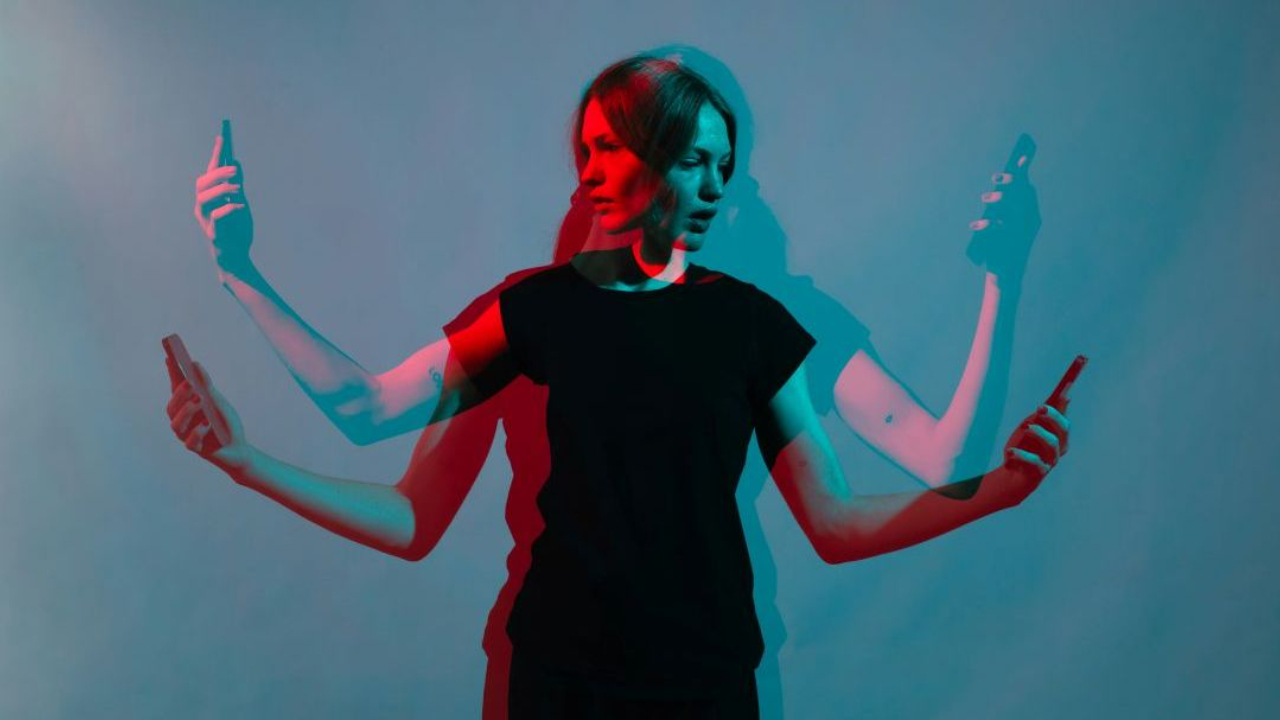
For many, anxiety does not always start with one dramatic event. Sometimes it builds in small, quiet ways. You wake up and check your phone before your feet hit the floor. You see other people’s bodies, relationships, apartments, routines, careers, skin, confidence, and happiness before you have even had a chance to come back to yourself. By the time the day begins, your body is already comparing, scanning, and bracing.
This is one of the hardest parts of modern anxiety. It doesn't just live inside your thoughts. It is being fed by constant exposure. You're always "on."
Social media can make it feel like everyone else is moving faster, doing better, looking better, and somehow handling life with more ease. Even when you know what you are seeing is curated, your nervous system still absorbs it. Recent reviews continue to find that problematic social media use in adolescents and young adults is linked with higher anxiety, stress, and sleep disruption. Research also suggests that the way social media affects young people often depends on how it is being used, especially when comparison, overuse, and passive scrolling are involved.
Meet Ava:
A client like Ava comes to mind. She was bright, kind, and deeply self-aware. She also felt anxious almost all the time. She kept telling herself she needed better time management, more discipline, a better morning routine. But when we looked more closely, her day began with stimulation and ended with comparison. She was not just "using" her phone. Her phone had become the place where her nervous system kept checking for belonging, direction, and proof that she was enough.
Fear and this kind of anxiety can feel deeply personal. But often it is not a character flaw. It is the understandable strain of trying to build a self while constantly being flooded by everyone else’s image of theirs.
Two recommendations
Create edges around social media instead of letting it shape the whole day.
Open-ended checking keeps the body on alert. Choosing set times to check social media gives your system more room to settle and helps reduce the endless cycle of comparison and interruption. Recent research, including a cohort study on social media detox, suggests that even short breaks from problematic use can reduce anxiety and insomnia symptoms.
Protect your sleep like it is part of your mental health care, because it is.
Scrolling late into the night often keeps the mind activated long after the phone is down. Reviews continue to show that excessive social media use is associated with poorer sleep in adolescents and young adults, which can intensify emotional reactivity and anxiety.
Two Ideas around healing
Exercise 1: The first-hour reset
For one week, do not open social media in the first hour after waking.
Instead, choose three simple things: water, daylight, and one quiet moment with yourself.
Notice what changes in your body when the day begins with you instead of the feed.
Exercise 2: The comparison interrupt
Each time scrolling leaves you feeling smaller, pause and finish this sentence:
What I am seeing is not the whole truth, and what I need right now is…[give yourself words you actually need].
Why? This helps move the mind away from performance and back toward actual need.
Research:
Agyapong-Opoku, N., et al. (2025). Effects of social media use on youth and adolescent mental health: A review.
Calvert, E., et al. (2025). Social media detox and youth mental health.
Danny, J. Y., et al. (2024). The impact of social media use on sleep and mental health in youth: A scoping review.
Ndubisi, A., et al. (2025). Social media use and sleep quality in adolescents and young adults: A scoping review of reviews.
Shannon, H., et al. (2022). Problematic social media use in adolescents and young adults: Systematic review and meta-analysis.
HPT disclaimer: These blog posts are for educational purposes only and are not a substitute for therapy, diagnosis, or individualized medical or mental health care. If anxiety is significantly affecting daily life, reaching out to a licensed mental health professional may help. If you are in immediate danger or crisis, call 911 or 988 right away.
Join Our Newsletter
Join our mailing list to receive the latest updates.
Don't worry, your information will not be shared.
We hate SPAM. We will never sell your information, for any reason.