The Hidden Anxiety Crisis in High School Students: “High School Isn’t Fun Anymore. I Just Want Out.”
May 20, 2026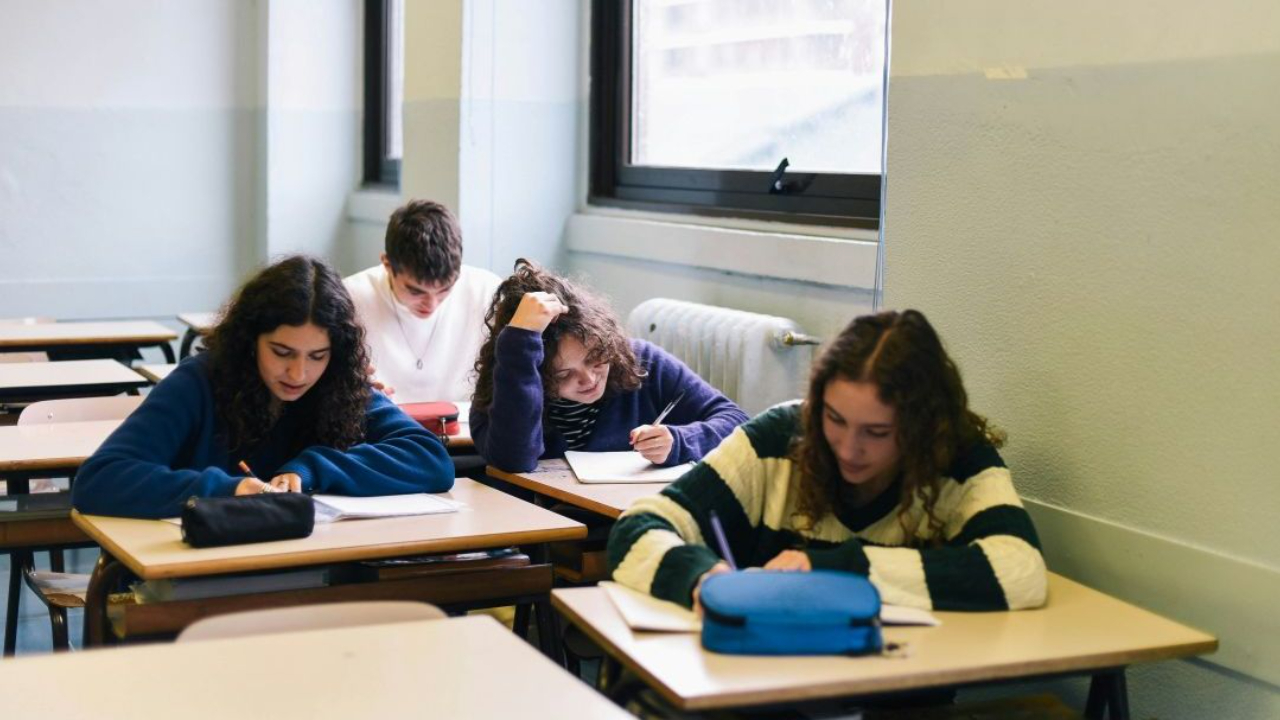
At what point did high school stop feeling like a place to grow, explore, connect, and discover who you are?
Or maybe, for many students, it never truly felt that way at all.
Somewhere along the line, the experience shifted. What was once supposed to support learning, friendship, creativity, and development now often feels dominated by pressure, performance, comparison, exhaustion, and survival. Many teens no longer describe high school as an important season of growth. They describe it as something they are trying to endure.
This is our answer and it's vitally important: Because if teenagers are spending some of the most neurologically important years of their lives feeling chronically overwhelmed, emotionally unsafe, sleep deprived, socially evaluated, and internally exhausted, we have to ask a harder question:
What exactly are we teaching them to survive?
Teens today are learning survival strategies early. How to push through burnout. How to function while anxious. How to disconnect from their bodies. How to tie worth to grades, productivity, appearance, social approval, and achievement. How to keep performing even when they are mentally exhausted.
Yes, resilience is great but there is a difference between building resilience and normalizing chronic stress. We are normalizing STRESS!
The teenage brain is still developing. Research continues to show that adolescent nervous systems are especially sensitive to social pressure, rejection, reward, emotional unpredictability, and sleep disruption. Add social media, constant comparison, academic competition, extracurricular overload, and fear about the future, and many students begin living in a near-constant state of activation.
These teens are not weak, their environment is constantly overwhelming them.
If you say "that's life" then I challenge you to ask yourself - what's the price tag?
What happens when young people become so focused on surviving these years that they lose the ability to enjoy them? What happens when rest feels guilty, play feels unproductive, and self-worth becomes tied to constant performance?
So, maybe the better question is not:
“How do we get teens to tolerate more pressure?”
Maybe the question is:
“How do we create environments where their nervous systems can actually develop in healthy ways?”
Because high school should not only prepare teens for achievement.
It should prepare them for life.
A life where they feel connected to themselves.
A life where learning does not require emotional depletion.
A life where success and mental health are not constantly fighting each other.
Perhaps this is more close to home and person - maybe you did not get the choice to pick safety over survival and you lived in a real life state of anxiety.
Perhaps you dealth with perfectionism, procrastination, emotional shutdown, irritability, exhaustion, panic before school, fear of failure, social withdrawal, or the feeling that you could never fully relax. I see you. That anxiety and overwhelm was real for you and it's real for your teen.
Let's make changes!!
Here me when I say that one of the most painful parts is that the anxiety loop is that it often becomes reinforced in ways teens and parents do not fully understand.
Here's what to know...
The Anxiety Loop Teens Get Stuck In
Psychologically, intermittent reinforcement is one of the strongest conditioning patterns the brain can experience.
It happens when stress, reward, approval, criticism, or relief become unpredictable.
A teen studies for hours and gets praised once, ignored the next time.
A social post gets validation one day and exclusion the next.
A friend group feels safe until suddenly it does not.
A parent seems proud when grades are high, disappointed when they are not.
A teen pushes themselves past exhaustion and temporarily feels “good enough.”
The nervous system begins chasing stability that never fully arrives.
Research on adolescent stress and reward systems continues to show that teen brains are especially sensitive to social evaluation, unpredictability, rejection, and reward-based reinforcement. During adolescence, the emotional and reward centers of the brain are highly active, while the systems responsible for regulation and perspective are still developing. That means uncertainty can feel enormous, and social pain can register in the body as deeply threatening.
This is why high school anxiety can become so consuming.
The brain keeps searching for the next moment of relief:
The next good grade.
The next reassuring text.
The next sign they belong.
The next proof they are enough.
And when relief comes inconsistently, the nervous system works even harder.
When Teens Start Living in “Performance Mode”
Many teens slowly stop asking:
Who am I becoming?
And start asking:
How am I being perceived?
That shift changes everything.
Instead of living, they monitor themselves.
Instead of learning, they perform.
Instead of enjoying friendships, they analyze them.
Instead of resting, they feel guilty for slowing down.
Over time, the body stays activated.
Sleep becomes harder.
Motivation drops.
Confidence weakens.
Joy gets replaced with pressure.
And because so much of modern teenage life happens online, the nervous system rarely gets a break. Research continues to show strong links between social media overload, anxiety, sleep disruption, and emotional distress in adolescents.
This is not because teens are weak.
It is because many are growing up in environments where the nervous system never fully gets to settle.
Think of Emma
Emma was a 16-year-old honors student who looked successful from the outside. Good grades. Involved in activities. Responsible. Polite.
But internally, she felt exhausted almost all the time. When asked how she was she would either say, "fine" or "great." But she never really felt fine or great. Because if she got a B, she spiraled. If friends took too long to respond, she assumed they were upset with her. She stayed up late replaying conversations, checking social media, and trying to stay ahead of everything.
She described feeling like she could never “turn off.”
Her parents rarely checked in because they said she always seemed to have it "all together." Emma reported this was just one more balancing part of the situation. She couldn't let her parent think she was failing.
But after she started therapy, what became clear over time was that Emma’s nervous system had linked achievement and approval with safety. The moments she felt accepted or successful gave temporary relief, but because that relief was inconsistent, her anxiety kept intensifying.
She was not just trying to succeed. She was trying to feel secure. Over time, learning how to ask for help, setting boundaries with her social media, her school work, and doing some just for fun, Emma blossomed into a completely different idea around safety. She knew that "stopping" the loop meant stopping it as soon as she "felt" it start. But she had to learn to know what that felt like first.
"I am a completely different person today than I was sophomore year. I am relaxed, love hanging with my friends, and I have managed to keep my grades all in check with out the extra anxiety because I get it now. I know my loops and stop myself right away! Learning this changed my life!"
How to Help Teens Find Safety
Teens do not need more pressure to “push through.”
Most are already pushing too hard.
What they often need is:
- Space to feel without immediately being evaluated
- Relationships where they do not have to perform
- Permission to rest without guilt
- Support that reminds them their worth is not constantly on trial
- Understand the "Loop" and How to call it out and stop it at the start.
Safety is not created by perfection. It is created through consistency, connection, and emotional steadiness.
When teens begin to feel emotionally safe, the nervous system no longer has to chase validation with the same intensity.
Two Ways Teens Can Step Out of the Fear Loop
1. Create one place in life where performance does not matter
Every teen needs at least one area of life that is not tied to achievement, comparison, or outcome.
That might be:
- Art
- Music
- Walking
- Gaming with trusted friends
- Cooking
- Journaling
- Time outside
- Movement that is not competitive
The goal is nervous system recovery, recognizing their loops and giving them tools to stop it.
A brain that is constantly evaluated never fully rests. Teens need experiences that remind them they are allowed to exist without earning approval every second.
2. Reduce “constant checking” behaviors
Many anxious teens stay trapped in loops of reassurance:
Checking grades repeatedly.
Checking social media constantly.
Checking who viewed their story.
Checking texts over and over.
These behaviors temporarily reduce anxiety, but long term they strengthen it.
Encouraging teens to slowly reduce compulsive checking helps the brain learn something important:
uncertainty can be tolerated without immediate action.
That is how confidence begins to build.
High School Ideas for Success...
Teach teens to measure success by steadiness, not perfection
Perfection creates fragility.
Steadiness creates resilience.
A teen who learns how to sleep consistently, regulate stress, recover from setbacks, maintain supportive relationships, and stay connected to themselves is developing something far more important than constant performance.
They are building a nervous system that can actually sustain life. Not helping teens become perfect students. Helping them become whole people.
Reflection Note:
High school can feel enormous while you are inside it.
It can feel like every decision matters forever.
Like every mistake defines you.
Like everyone else has it figured out.
But most people are carrying more fear than they show.
And your worth was never meant to depend on your grades, your popularity, your productivity, or how perfectly you perform these years.
You deserve a life that feels bigger than survival.
Disclaimer
This article is intended for educational and reflective purposes only and is not a substitute for medical advice, diagnosis, or mental health treatment. Every teen’s experience is unique, and anxiety, depression, burnout, or emotional distress should be taken seriously. If you or your child are struggling with persistent anxiety, hopelessness, panic, self-harm thoughts, or difficulty functioning, please seek support from a licensed mental health professional or appropriate medical provider. In moments of crisis, contact 911 or the 988 Suicide & Crisis Lifeline immediately.
Join Our Newsletter
Join our mailing list to receive the latest updates.
Don't worry, your information will not be shared.
We hate SPAM. We will never sell your information, for any reason.